
Procedures for a good sealing
-
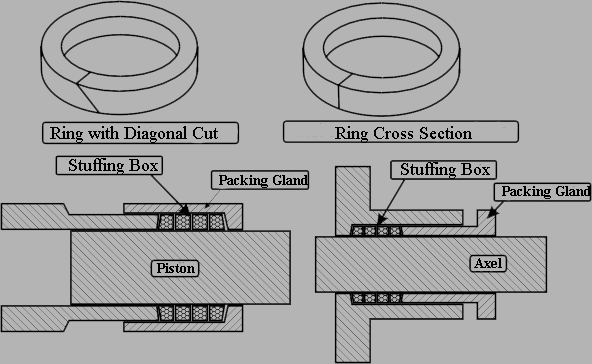
In lids: Removal of all the old material and positioning of the new seal, either greased or graphite impregnated, with the correct size for the groove. The splice must be done with diagonal cuts. The tightening must be enough to stop all leaking.
-
In axels: Removal of all the old material, assessment of longitudinal risk to the shaft, rusts or burrs; the wear due to the old sealer is tolerable. Graphite impregnated or greased sealers should be used on the axle support, filling the gaps completely, using sealers cut diagonally or perpendicularly, forming individual rings, as many as necessary. The tightness should be enough to allow a small dripping, which helps with the sealer’s cooling, increasing its service life. When using graphite impregnated sealers, it should be done an initial lubrication with grease or oil, making it easier to place the sealers and prolonging its service life.
-
In pistons: Removal of all the old material, assessment of transversal risk to the piston, rusts, burrs and wear, being the latter very important for pistons, giving it a conic shape, making it impossible to control the dripping. More frequent adjustments are necessary, reducing dramatically the service life of the sealer. Greased sealers should be used on the piston cylinder, filling the gaps completely, using sealers cut diagonally or perpendicularly, forming individual rings, as many as necessary. The tightness should be enough to allow a small dripping, too much tightening removes the lubrication too fast, reducing the service life of the sealer.
|